

One of the most confusing milestones for a fitness beginner is transitioning from random, sporadic workouts to a structured weekly program. When you first start lifting weights, performing full-body circuits three days a week is fantastic. But eventually, as you get stronger and apply progressive overload, those full-body sessions become incredibly taxing, and you stop recovering in time for your next workout.
This is exactly where the concept of the "Training Split" enters the equation. A training split simply dictates how you divide (or "split") the muscles you are training across the days of the week.
While there are many complicated programs out there (the "Bro Split," the "Push/Pull/Legs" split), the absolute gold standard for the vast majority of gym-goers and home-workout enthusiasts is the Upper/Lower Split. Today, as certified strength coaches, we are going to break down exactly why this structure is so scientifically effective, and how you can map it perfectly onto a busy schedule.
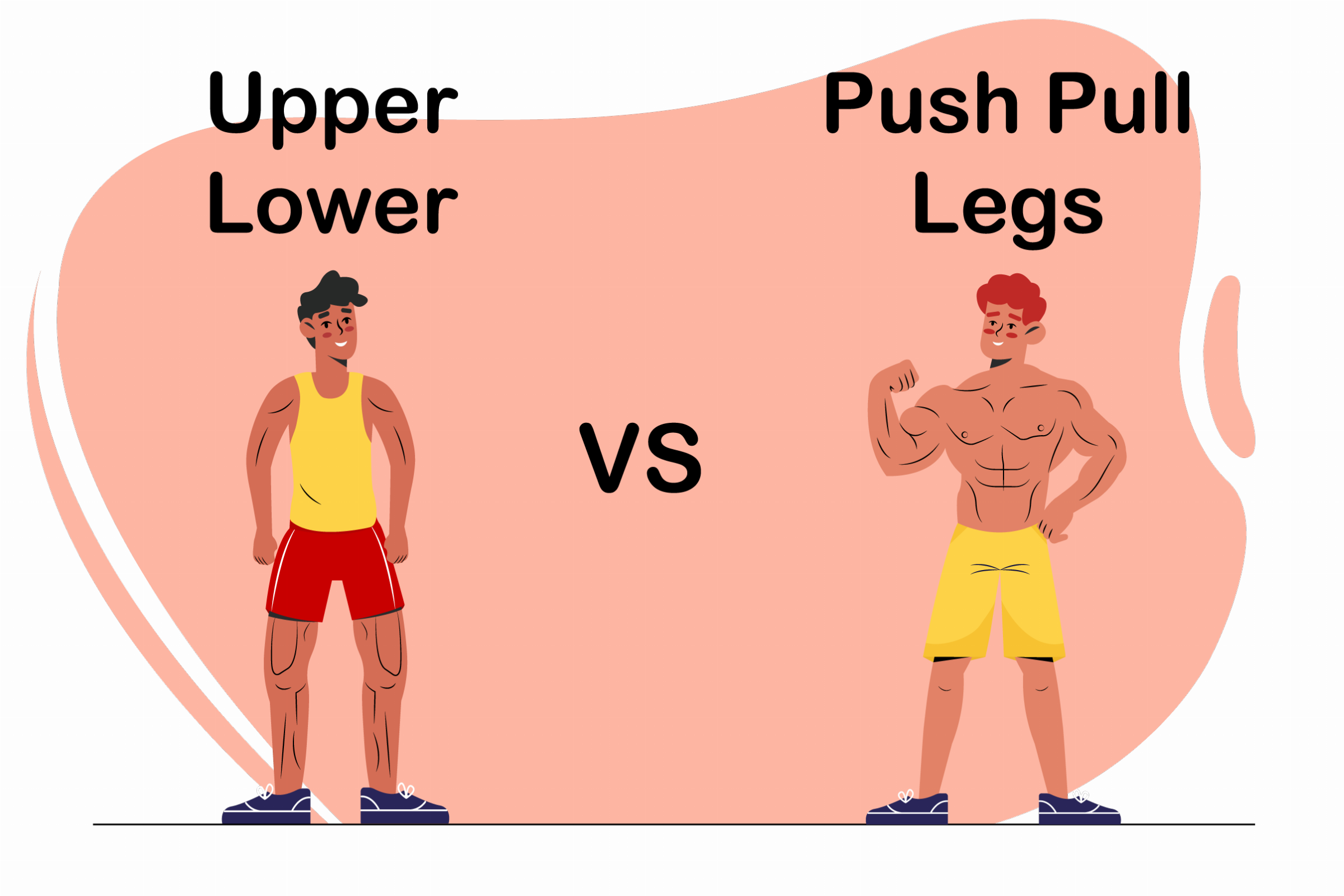
What Exactly is an Upper/Lower Split?
The premise is beautifully simple. You divide your entire body into exactly two halves:
- Upper Body Days: You train all the muscles located above your waist. This includes your chest, back (lats, rhomboids), shoulders (deltoids), biceps, and triceps.
- Lower Body Days: You train all the muscles located below your waist. This includes your quadriceps, hamstrings, glutes, and calves.
Typically, this split is performed across four days a week. You do two Upper days and two Lower days, allowing for adequate rest in between identical sessions.
The Science: Why This Split is Optimal
1. The Mastery of Muscle Protein Synthesis (MPS)
When you lift heavy weights, you do not build muscle in the gym; you gently tear it down. The actual rebuilding (muscle growth) happens after the workout. This biological process is known as Muscle Protein Synthesis (MPS).
Scientific studies undeniably show that after a hard workout, MPS remains elevated in that specific muscle group for approximately 36 to 48 hours. After 48 hours, MPS returns to its normal baseline.
If you only train your chest once a week on a Monday (the classic "Bro Split"), it repairs and grows until Wednesday. From Thursday to Sunday, your chest is doing absolutely nothing to progress. It is just waiting.
By adopting an Upper/Lower split executed four times a week, you perfectly overlap these MPS windows. You train the Upper body on Monday, it grows until Wednesday, and just as MPS is returning to baseline, you stimulate it again on Thursday. You effectively double the amount of growth signals your muscles receive over the course of a year.
2. Perfect Recovery Management
Full-body routines are incredible, but doing heavy barbell squats immediately followed by heavy bench presses and heavy rows is overwhelmingly exhausting to the Central Nervous System (CNS). By splitting the body in half, you can completely decimate your lower body on Tuesday, and even if your legs are brutally sore on Thursday, you can perform an incredible upper body workout because those specific muscles are completely fresh.
How to Structure Your 4-Day Week
Here is exactly how a perfect 4-day Upper/Lower split looks when mapped onto a standard 7-day calendar. Note the strategic placement of the rest days.
-
Monday:Upper Body A (Heavy compound focus: Bench Press, Rows, Overhead Press)
-
Tuesday:Lower Body A (Heavy compound focus: Squats, Romanian Deadlifts, Calf Raises)
-
Wednesday:Active Recovery (Light walking, yoga, mobility)
-
Thursday:Upper Body B (Hypertrophy focus: Incline Press, Pull-ups, Bicep Curls)
-
Friday:Lower Body B (Hypertrophy focus: Leg Press/Lunges, Leg Curls, Core)
-
Saturday:Rest or Light Cardio
-
Sunday:Complete Rest
3 Crucial Tips for Success on the Upper/Lower Split
1. Do Not Skimp on the Warm-up
Because you are consolidating an entire half of your body into one session, you must ensure all the relevant joints are lubricated. On an Upper day, spend 5 minutes doing deep arm circles, band pull-aparts, and light push-ups before touching a heavy weight. On Lower days, prioritize deep dynamic lunges and hip-opening stretches.
2. Alternate Your Starting Movement
If you always start your Upper days with a chest press, your chest will grow phenomenally, but your back pulls (which are done later in the workout when you are fatigued) will suffer. Rotate your priorities. Start Upper Day A with a chest exercise, but start Upper Day B with a heavy back exercise (like a weighted pull-up or row).
3. Keep Total Volume in Check
More is not always better. Because you are hitting the muscle groups twice a week, you do not need 6 exercises for your chest on Monday. Select 2 or 3 highly effective exercises for the primary muscles, hit them hard for 3 working sets, and move on.
The Bottom Line
The Upper/Lower split is the ultimate intersection of science, efficiency, and real-world practicality. It ensures your muscles are stimulated precisely as frequently as their biological growth cycle demands while actively protecting your central nervous system from burnout. Stop guessing when to train which muscle group. Adopt the structure, stay consistent, and watch your strength absolutely skyrocket.
Let Us Do the Programming
Understanding the split is only half the battle. Knowing exactly which exercises to put into each day is where the real magic happens. Let our professional coaches take the wheel. Join our live strength programs where the weekly splits are scientifically designed for you.
Join the Live Strength Schedule