

Historically, the fitness world has been strictly divided into two distinct camps. On one side, you had the "athletes"—the heavy lifters, the runners, and the team sports players who prioritized explosive power, speed, and brute strength. On the other side, you had the "yogis"—perceived as gentle stretchers prioritizing meditation and deep breathing over measurable physical output.
But over the last decade, a massive paradigm shift has occurred at the highest levels of professional sports. From LeBron James to Tom Brady, elite athletes across every discipline have publicly adopted dedicated yoga routines. Yoga is no longer viewed as a soft, alternative day off; it is now recognized as a non-negotiable pillar of peak athletic performance.
If you are an athlete—whether you play in a competitive weekend soccer league, run marathons, or strictly lift heavy weights—ignoring mobility is the fastest way to cap your potential and guarantee an eventual injury. Today, we are breaking down the exact science of why the world's best athletes do yoga, and how you can use it to immediately improve your own performance.
The "Parking Brake" Phenomenon
To understand why athletes need yoga, you must understand how muscles generate power. A muscle creates physical force by contracting (shortening). However, muscles work in opposing pairs. If your quadriceps on the front of your leg contract to kick a soccer ball, your hamstrings on the back of your leg must simultaneously lengthen to explicitly allow that movement to happen.
Here is the problem: intense athletic training (like sprinting or heavy squatting) chronically tightens and shortens muscle tissue over time.
If your hamstrings are chronically tight, they physically cannot lengthen properly when you try to kick that ball or burst into a sprint. Your brain essentially perceives that tight hamstring as a physical threat pulling on the knee joint, and it automatically reduces the power output of your quadricep to protect you.
You are quite literally driving a Ferrari with the parking brake fully engaged. No matter how much explosive strength you possess, you can never fully access it if your opposing muscles are too tight to permit the full range of motion. Yoga effectively releases the parking brake.
3 Specific Ways Yoga Upgrades Athletic Potential
1. Unlocking Active Range of Motion (Mobility vs. Flexibility)
Flexibility is passive (e.g., how far someone else can push your leg into the air while you lay on a table). Mobility is active (how high you can lift your own leg into the air using only your own muscular strength). Athletes do not need passive flexibility; they need active mobility.
Yoga is the ultimate mobility training. When you hold a deep lunge in yoga, you are not just stretching the back leg; you are actively firing the glute and core to stabilize the posture. This teaches your central nervous system how to safely generate and control immense power at the extreme end ranges of your joints. Deeper ranges of motion equal a longer runway to generate speed and force.
2. Bulletproofing the Joints Against Injury
The vast majority of athletic injuries (ACL tears, strained hamstrings, blown rotator cuffs) do not occur right in the middle of a perfect, controlled movement. They occur at the chaotic, uncontrolled end ranges of motion—when a basketball player lands awkwardly on one foot, or a tennis player overreaches for a wide volley.
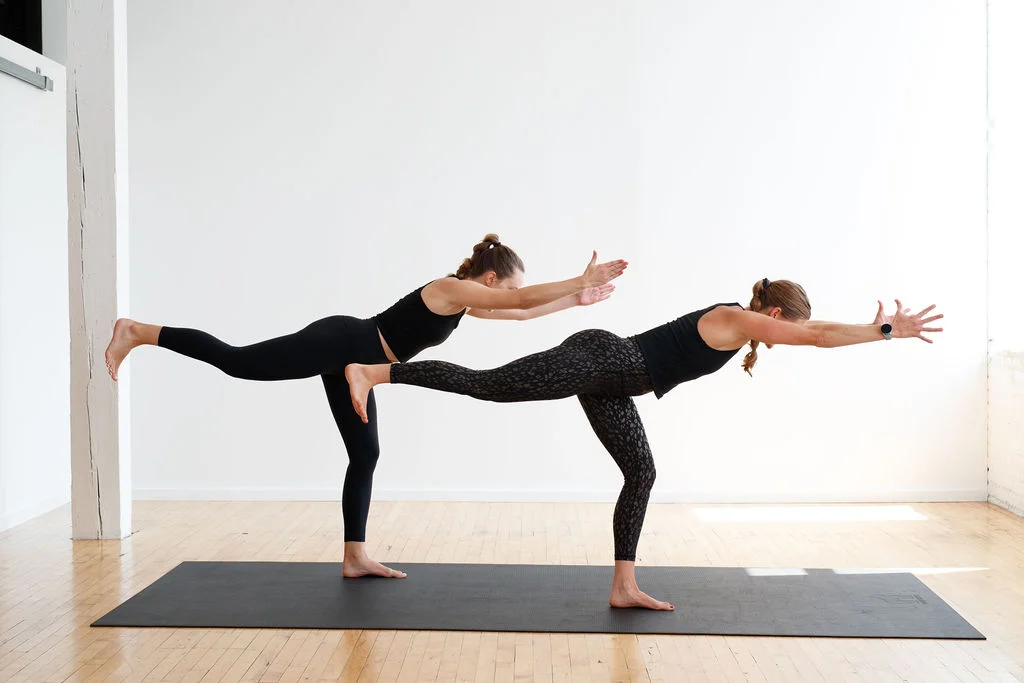
Yoga explicitly forces the body into deep, awkward balance positions (like Half Moon pose or deep, twisting lunges) and immediately asks the stabilizing muscles of the ankles, knees, and hips to hold the body perfectly still. By consistently training strength at these extreme end ranges in a controlled environment, you systematically bulletproof those vulnerable ligaments against the uncontrolled chaos of the athletic field.
3. Mastering the Parasympathetic Shift for Recovery
An athlete only grows stronger and faster during the recovery phase, not during the actual workout. Intense training locks the nervous system into a chronic "fight-or-flight" (sympathetic) state, flooding the body with cortisol that actively breaks down muscle tissue if sustained for too long.
The deep, diaphragmatic breathing central to Vinyasa yoga chemically forces the body to switch gears into the "rest-and-digest" (parasympathetic) state. A 30-minute restorative yoga session after a brutal heavy lifting workout physically dilates blood vessels, flushing toxic metabolic waste (like lactic acid) out of the tissues and rushing fresh, oxygenated blood in to repair the micro-tears. Yoga accelerates the timeline of biological recovery.
How to Integrate Yoga Into Your Training Block
You do not need to quit your primary sport to become a yogi. You simply need to supplement your training strategically.
Pre-Workout: Dynamic Vinyasa
Skip the static stretching before a heavy lift or sprint (which actually decreases explosive power). Instead, use a 10-minute dynamic, flowing Vinyasa sequence to elevate your core temperature, lubricate your joints, and "wake up" your central nervous system before asking it to perform.
Active Recovery Days: Yin or Hatha
On the days you usually do absolutely nothing between heavy sessions, perform 45 minutes of slow, deep-hold yoga. Do not push for intensity. The goal is simply to pump fresh blood through the sore muscles without adding any additional structural damage.
Target Individual Weaknesses
Runners should heavily prioritize hip-opening poses (Pigeon, Crescent Lunge). Powerlifters should prioritize thoracic spine and shoulder mobility (Puppy pose, aggressive Cat-Cow) to improve their overhead pressing and squatting mechanics.
The Bottom Line
Continuing to add more weight or run more miles on an immobile, highly restricted chassis is a guaranteed prescription for disaster. Yoga is not a replacement for your athletic training; it is the ultimate super-charger for it. By releasing physical tension, expanding your active range of motion, and accelerating nervous system recovery, a dedicated yoga practice allows you to finally access the absolute peak of your biological potential.
Unlock Your Athletic Potential
Don't let tight hips and a stiff spine dictate your performance ceiling. Our coaches understand the specific mobility demands of athletes. Join our live yoga sessions explicitly tailored to complement heavy training, prevent injuries, and accelerate your recovery.
Explore Yoga for Athletes